A UX research and design project focused on uncovering WTVP’s donor retention challenges and creating a research-driven solution.
PROJECT OVERVIEW
WTVP is a PBS member station serving Central Illinois that relies on community support to fund its programming and operations. Our team partnered with WTVP to explore how the station could better engage younger audiences and encourage more sustainable giving.
Through user research and usability evaluation, we examined the current donor experience across WTVP’s digital touchpoints and identified opportunities to make giving more accessible, engaging, and appealing to a broader audience.
THE CHALLENGE
WTVP’s donor base is largely made up of retirees, creating a need to attract and retain younger supporters. As the station’s existing donor base ages, expanding its audience becomes increasingly important to the station’s long-term financial sustainability.
Our challenge was to understand what motivates or discourages younger potential donors and determine how WTVP could create a giving experience that better meets their expectations.
OUR APPROACH
Our team took a research-driven approach to understanding the current giving experience. We combined user research with usability evaluation to identify pain points, understand donor motivations, and uncover opportunities for improvement.
We examined the experience across WTVP’s website and other relevant donation touchpoints, using our findings to develop actionable recommendations for the station.
STAKEHOLDER INTERVIEW
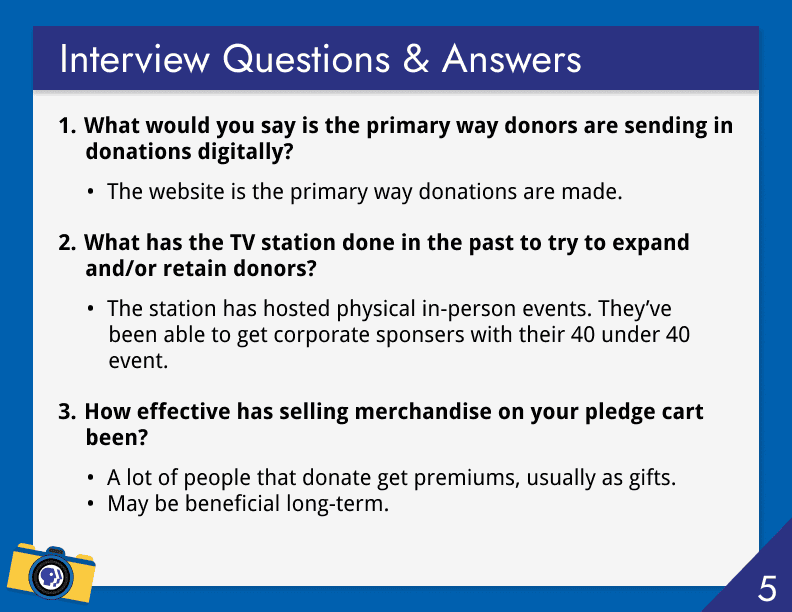
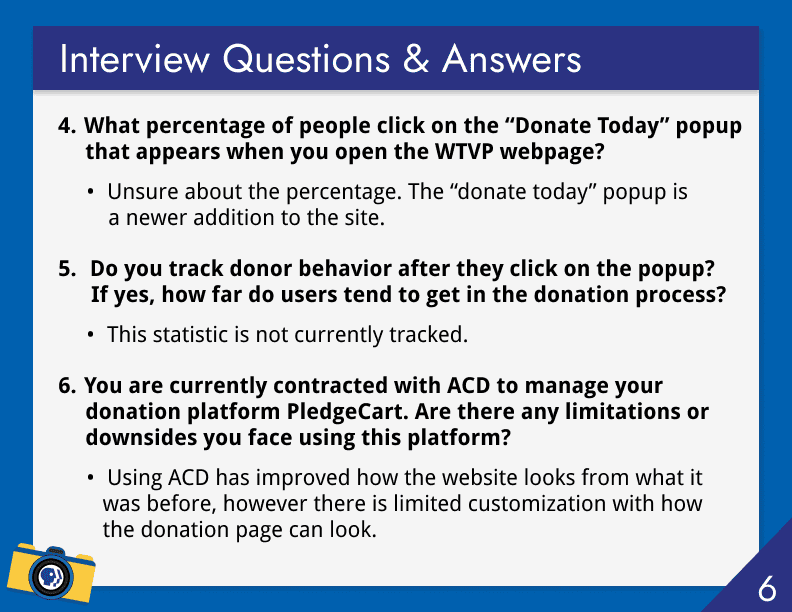
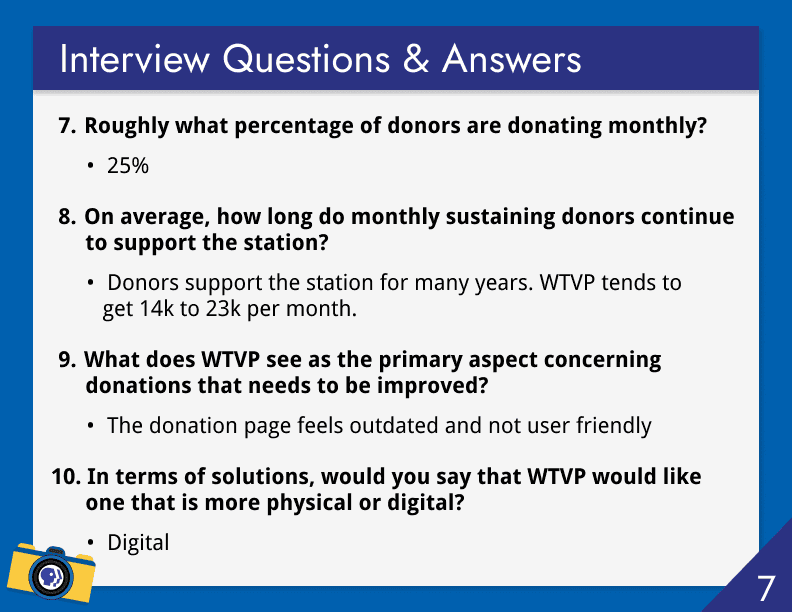
We began by interviewing WTVP stakeholders to understand the station’s existing approach to donor engagement and retention. We explored previous efforts to reach new audiences, challenges within the current donation experience, and whether WTVP was looking for a digital or physical solution.
COMPETITIVE ANALYSIS
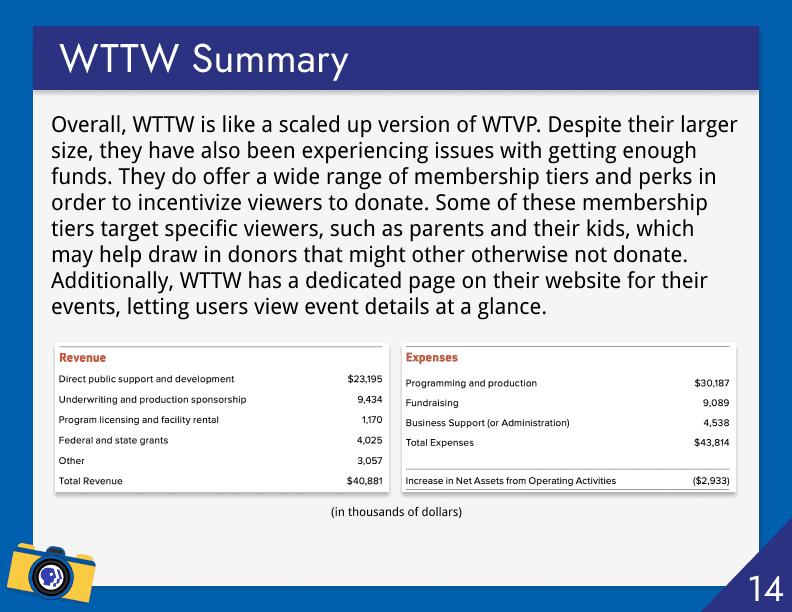
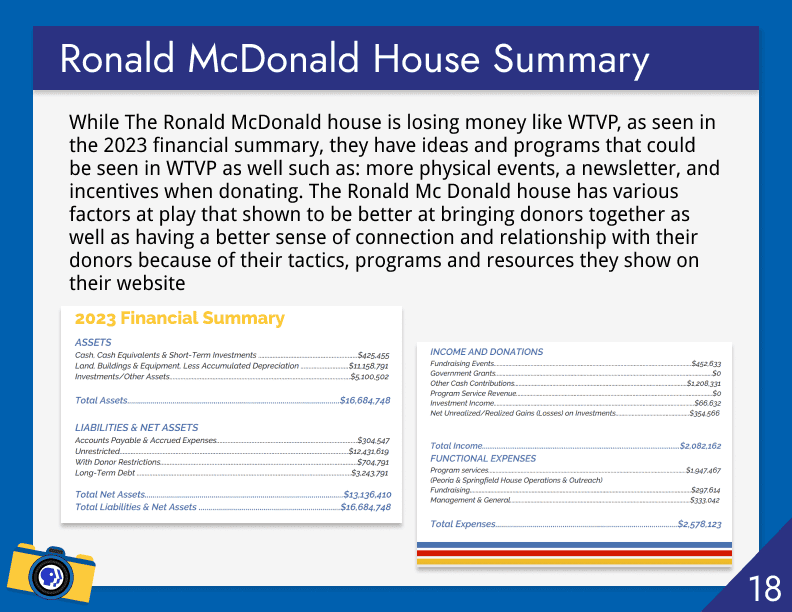
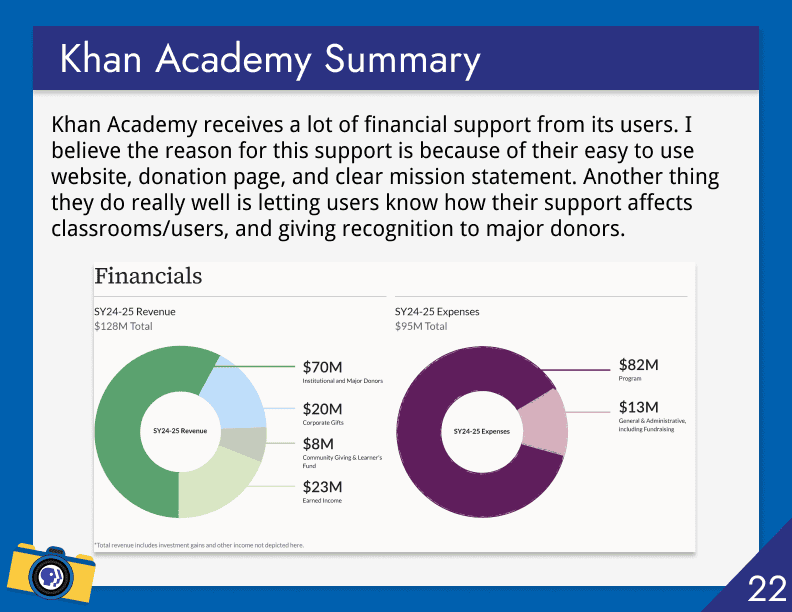
We analyzed three organizations to understand how different types of nonprofits and educational organizations approach digital giving. Our analysis included WTTW as a direct competitor, Ronald McDonald House as an indirect competitor, and Khan Academy as a niche competitor. We looked for patterns, strengths, and opportunities that could inform WTVP’s donor experience.
USER INTERVIEWS
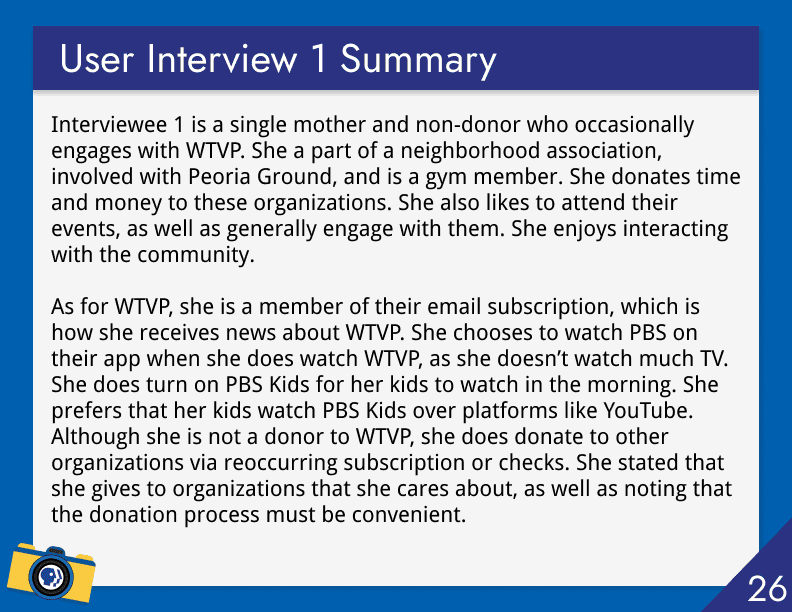
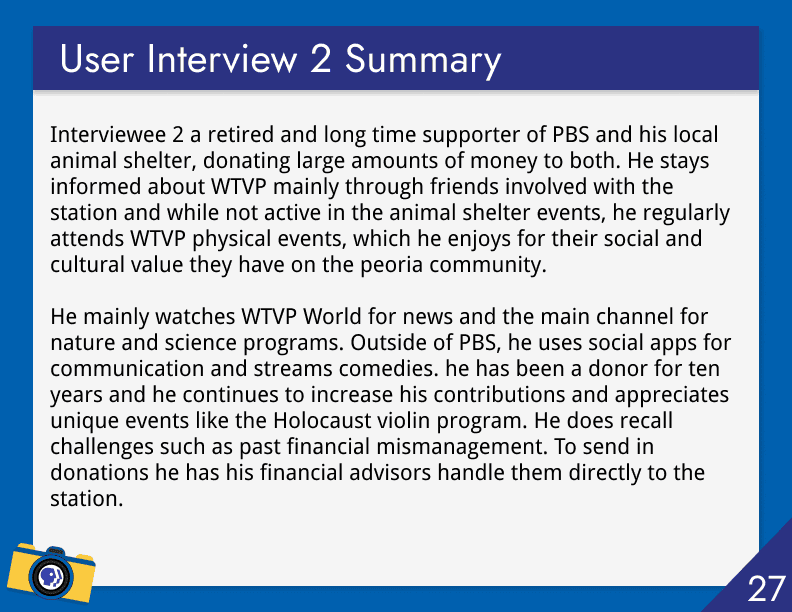
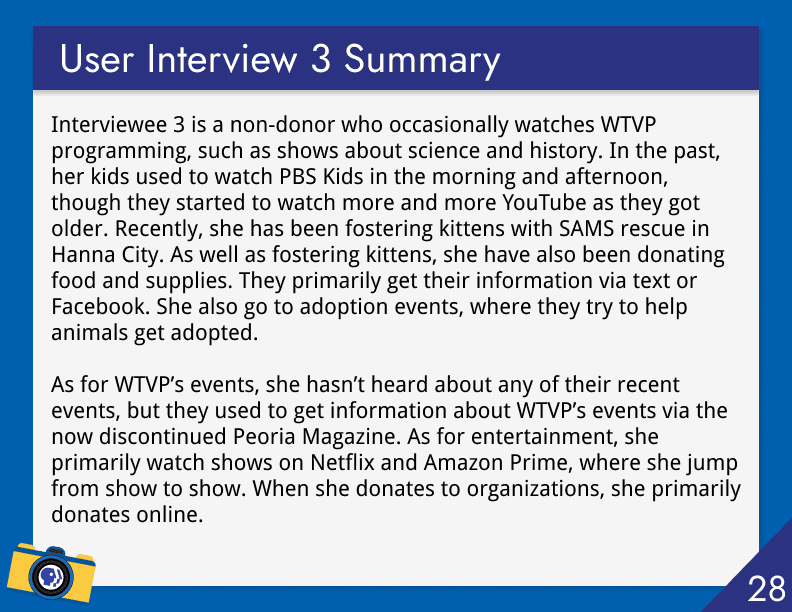
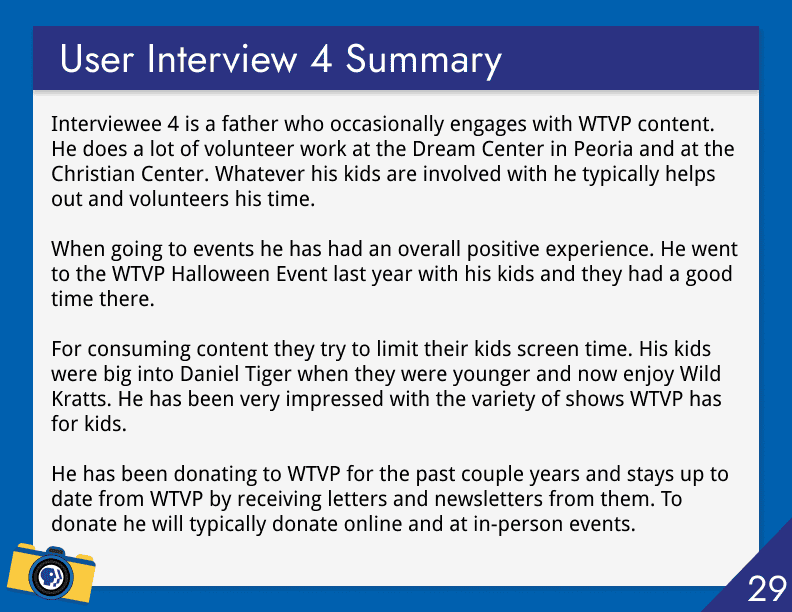
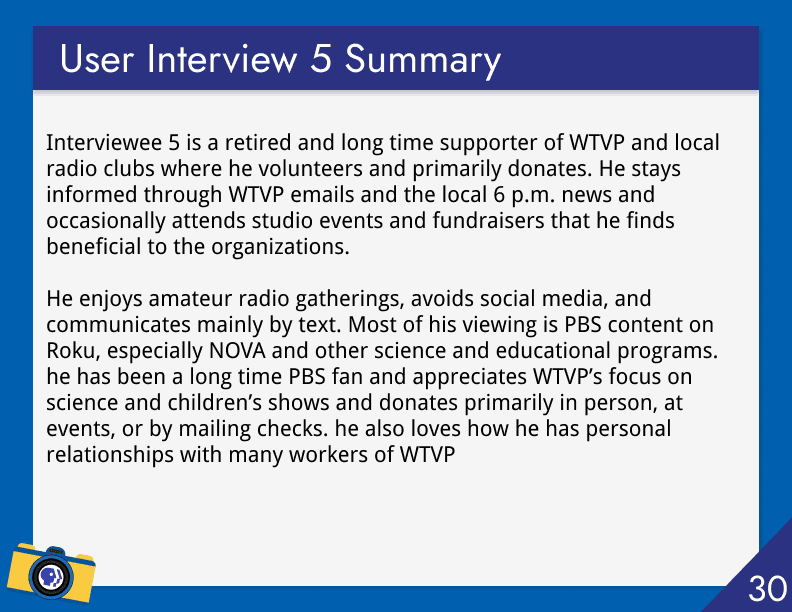
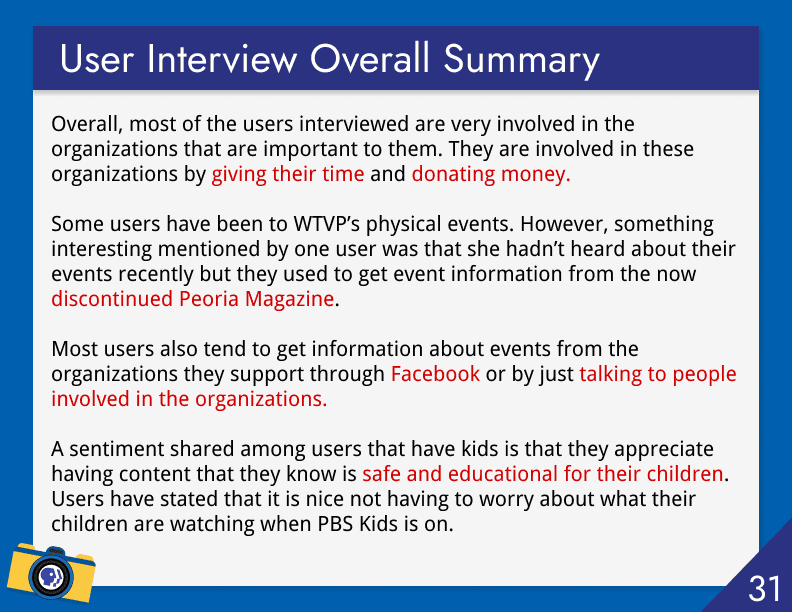
To better understand donor motivations and barriers, we conducted five interviews with both WTVP donors and non-donors. We explored participants’ experiences with charitable giving, what motivates them to support an organization, and factors that may discourage them from donating.
PERSONAS, EMPATHY MAPS, JOURNEY MAPS
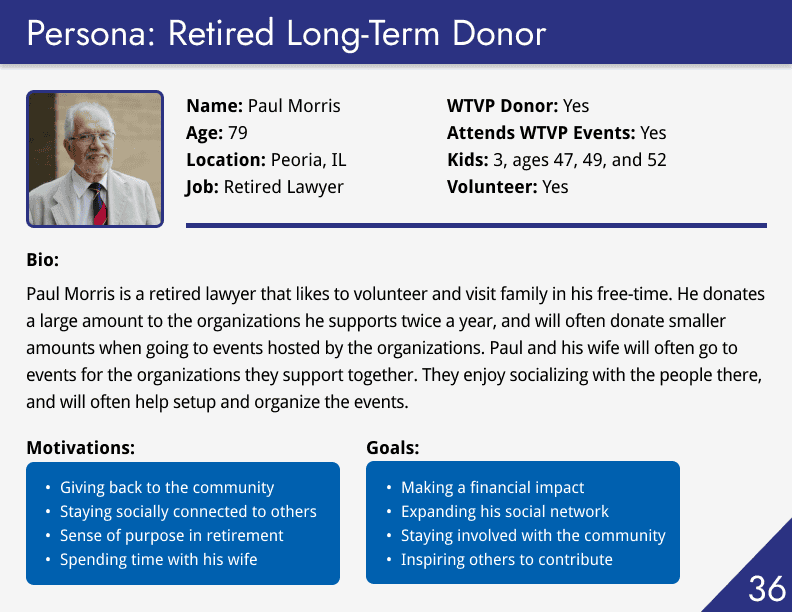
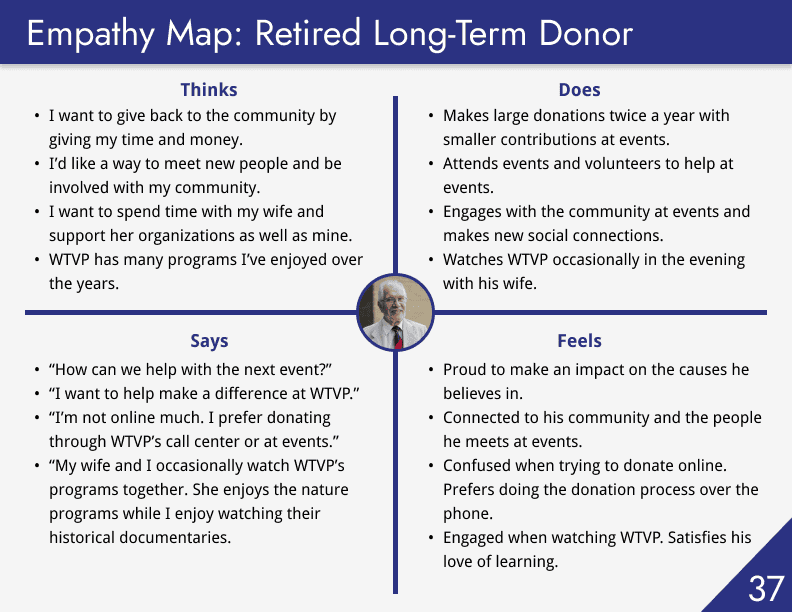
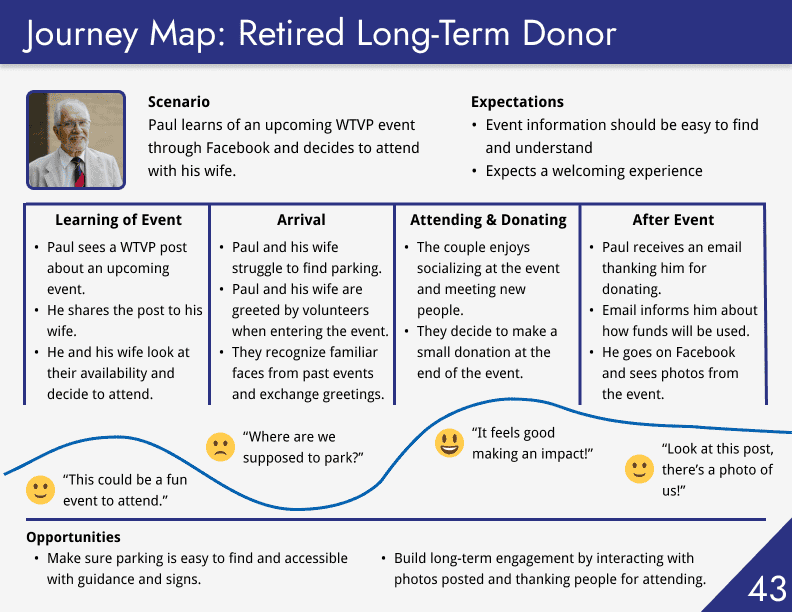
Using our interview findings, we developed three personas representing different perspectives within WTVP’s potential donor audience: a retired long-term donor, a young parent who does not currently donate, and an older parent who does not currently donate.
I created the persona, empathy map, and journey map for the retired long-term donor, helping our team better understand the motivations, expectations, and pain points of an existing WTVP supporter.
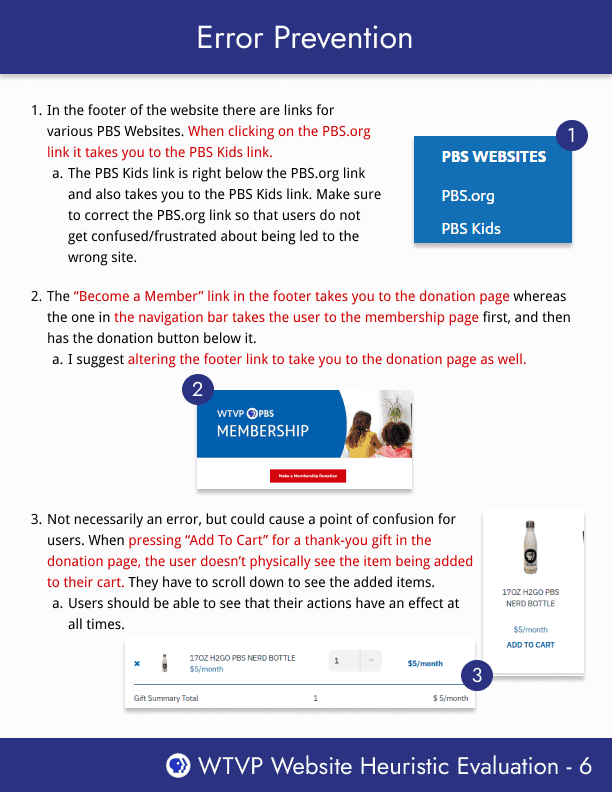
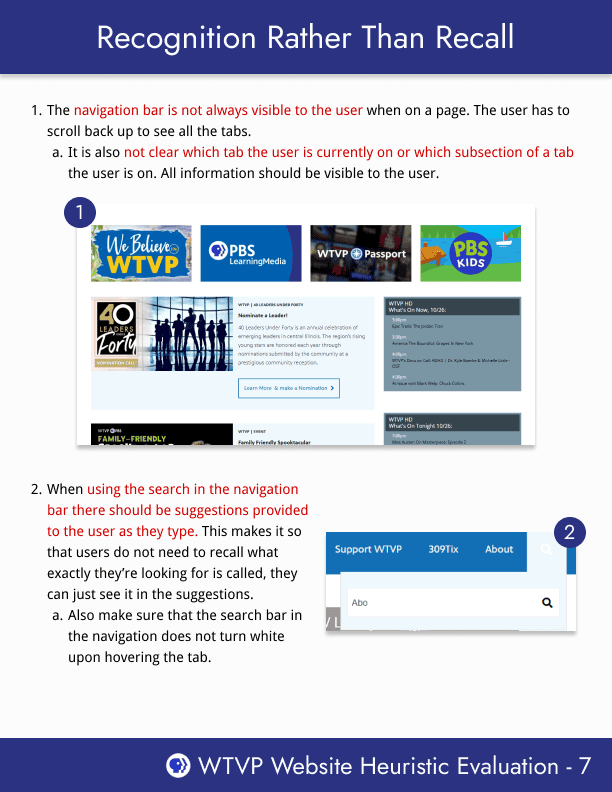
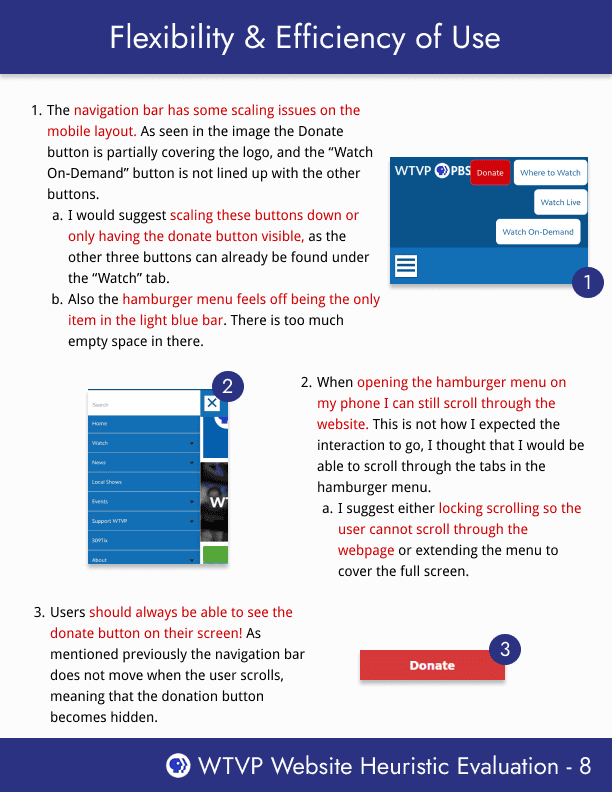
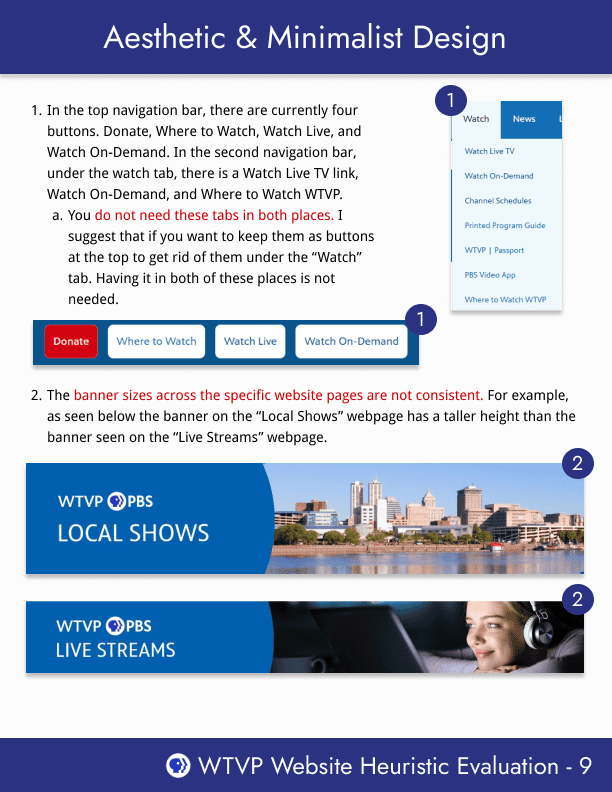
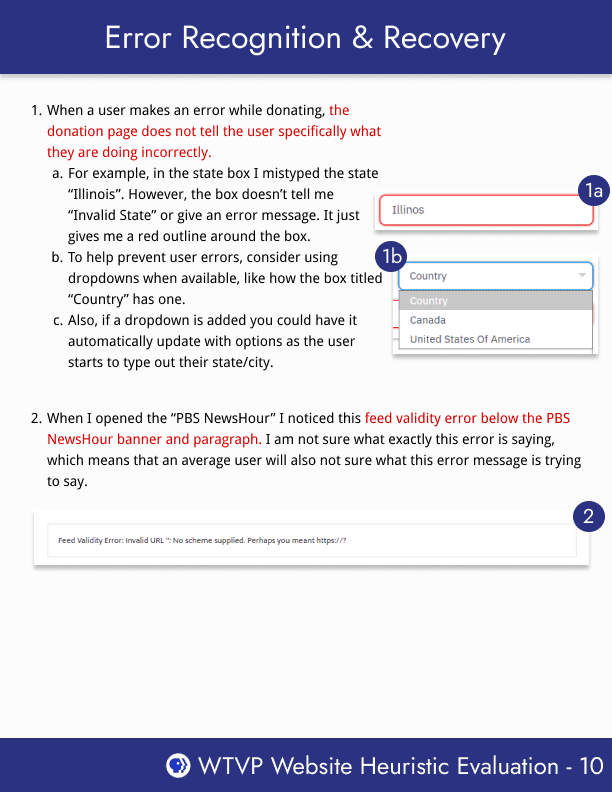
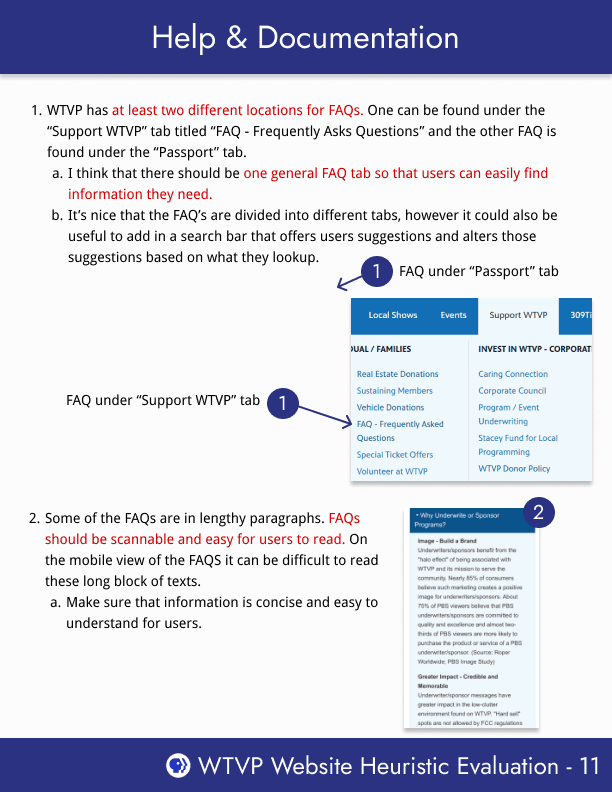
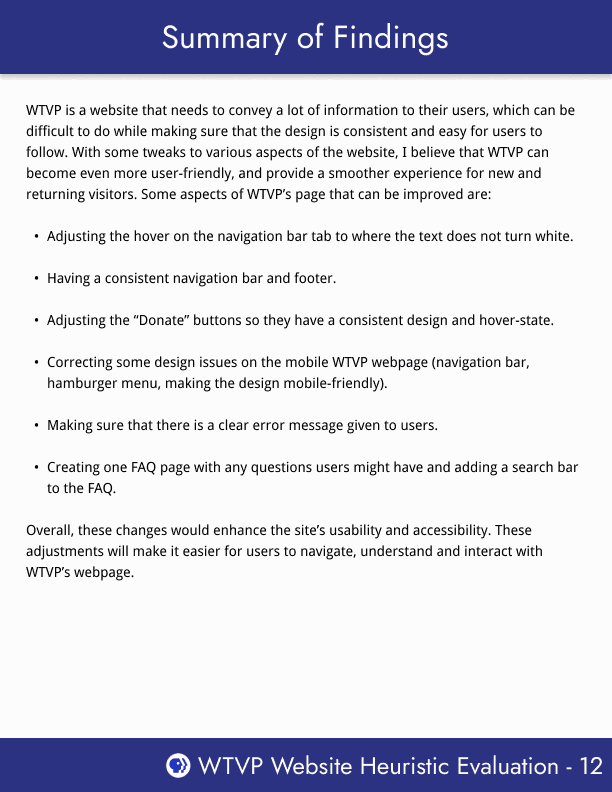
HEURISTIC WEBSITE EVALUATION
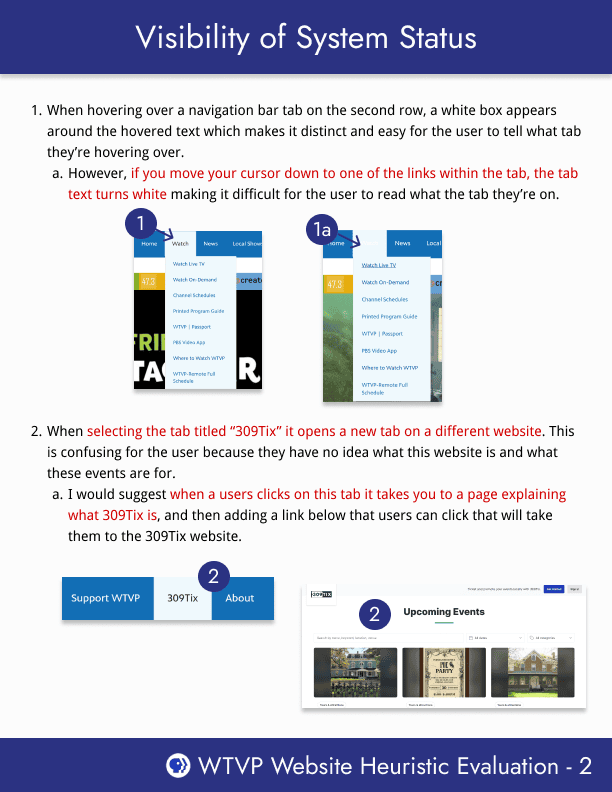
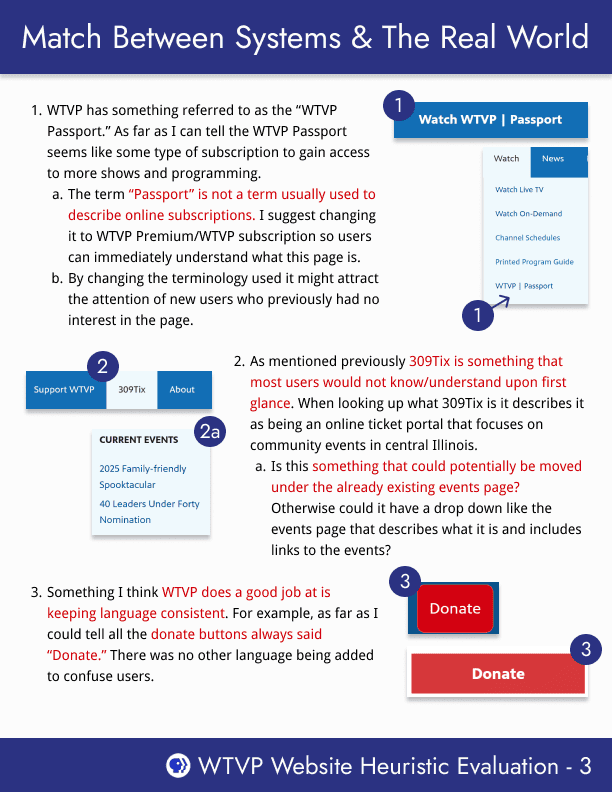
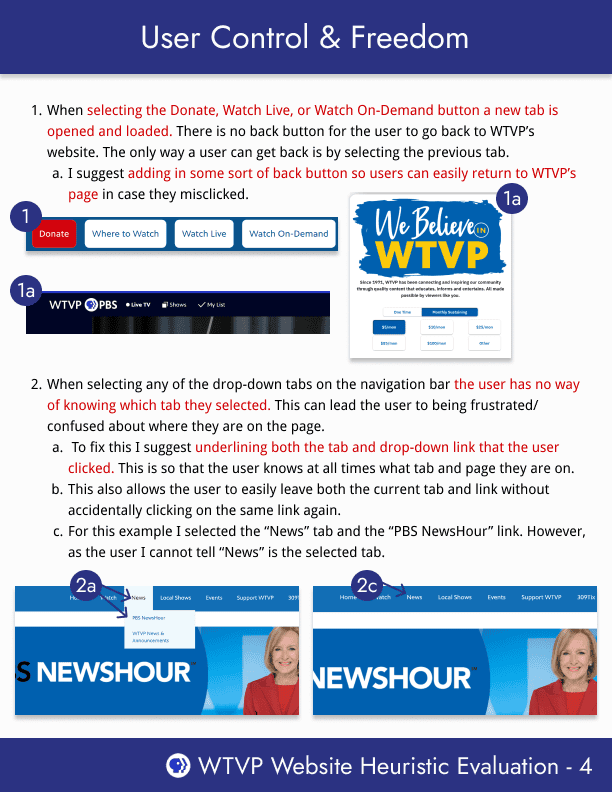
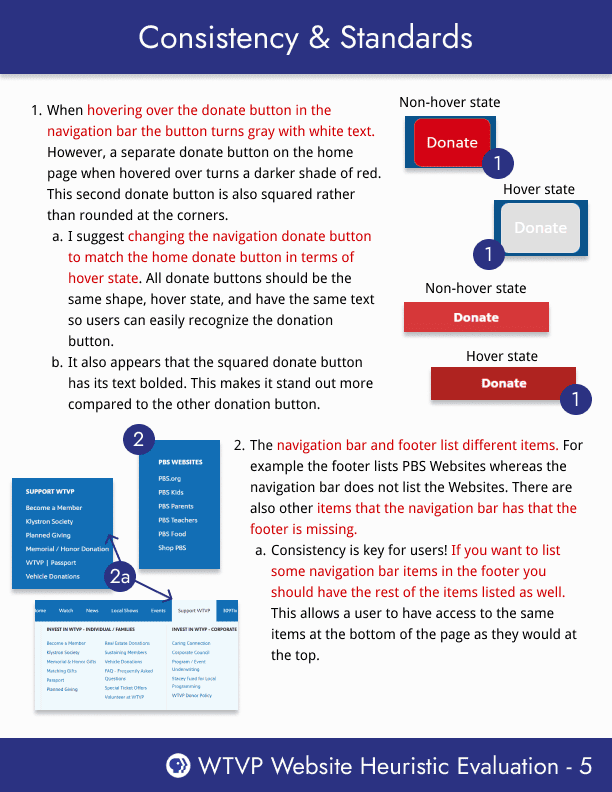
I conducted a heuristic evaluation of WTVP’s website to identify usability issues that could affect the donor experience. Using Nielsen’s usability heuristics, I documented areas where the site could be clearer, more efficient, and easier to navigate.
FINAL DESIGN
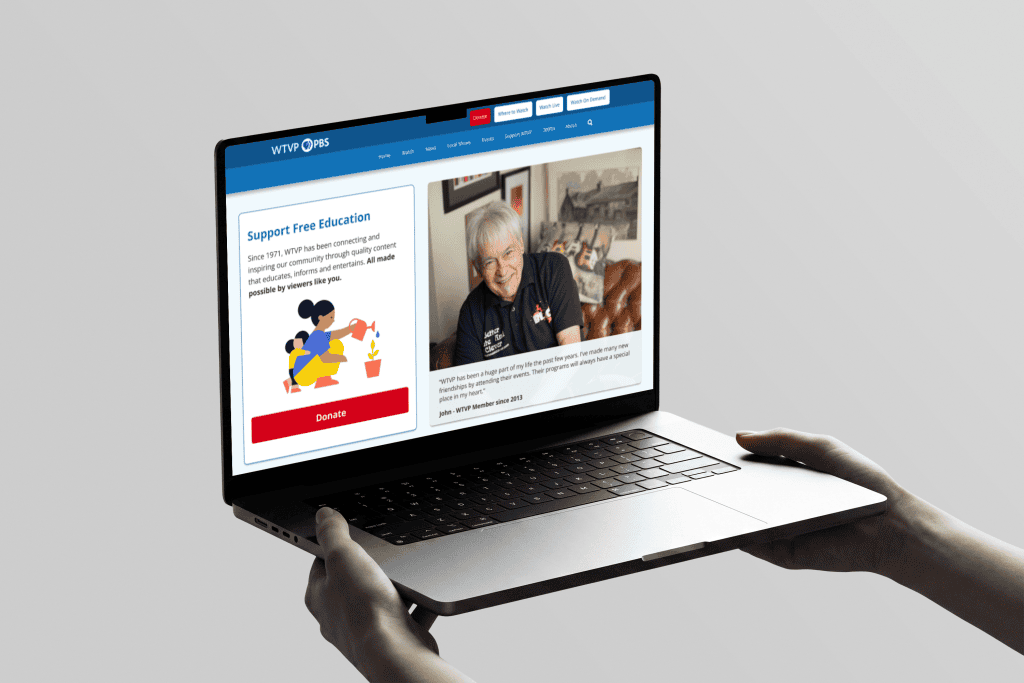
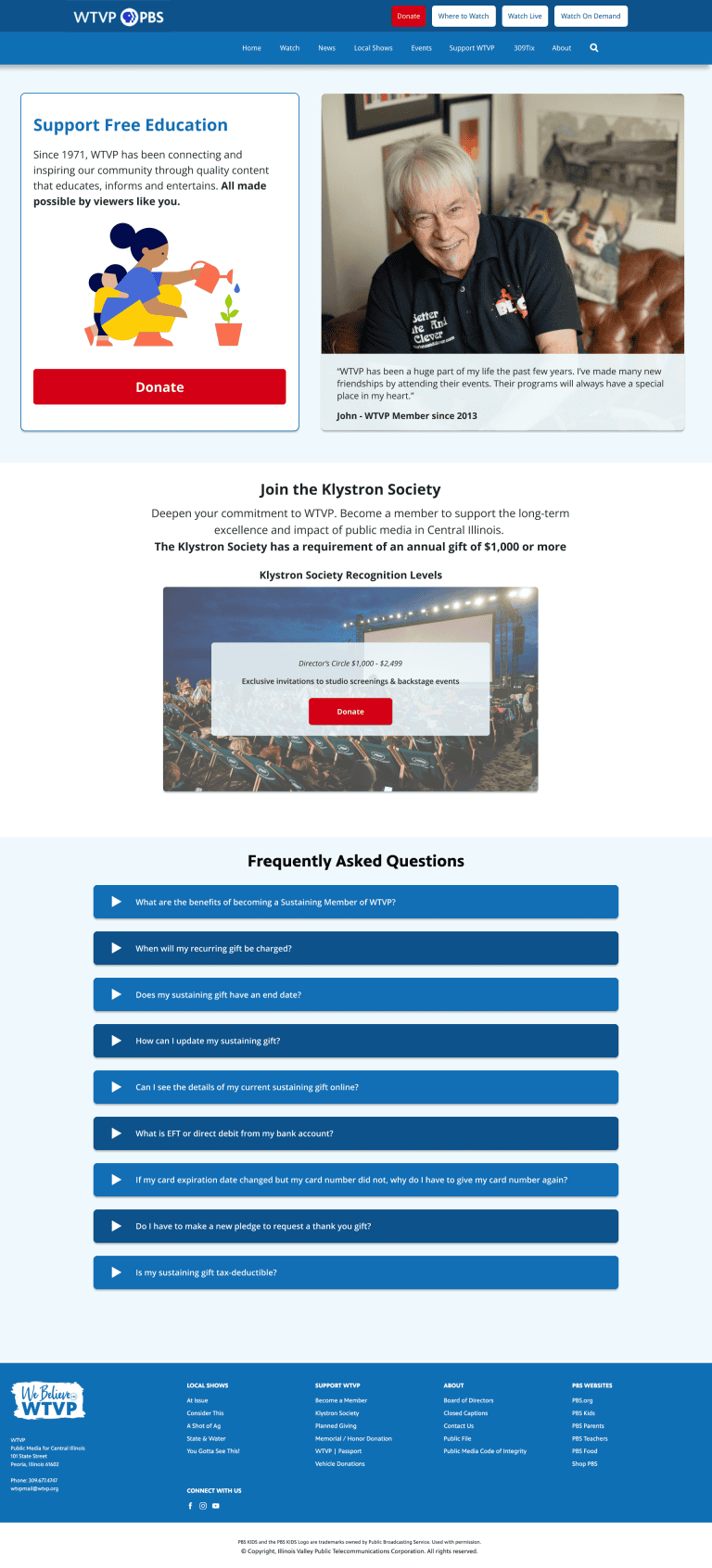
Our research revealed opportunities to make WTVP’s donation experience more approachable and engaging for a broader audience. Based on these findings, we redesigned WTVP’s donor page to create a clearer, more accessible giving experience.
MY CONTRIBUTION
UX Research · Heuristic Evaluation · Research Documentation · Stakeholder Presentation · CEO Presentations
I contributed to several stages of this project, including conducting stakeholder and user interviews, persona development, and usability research. I created a persona, empathy map, and journey map for our retired long-term donor, as well as conducting a heuristic evaluation of WTVP’s website. I also designed the pages for our research document, helping organize and communicate our findings clearly. In addition to the research and documentation, I helped present our research and final design to WTVP’s CEO.
REFLECTION
This project gave me the opportunity to work directly with a real organization and apply UX research methods to a complex, real-world problem.
The experience strengthened my ability to translate qualitative research into actionable insights and reinforced the importance of understanding the people behind a problem before designing a solution. Rather than assuming what would encourage younger donors, we used research to uncover what people actually needed from the experience. This project showed me how research can shape not only a design solution, but the way a problem itself is understood.
Next Project
Bradley University FUSE Website →
Let's connect!
Have a project, opportunity, or just want to say hello? I’d love to hear from you!